


Monthly AI Papers: June 2026
30 Jun 2026 | Paper Review Monthly Papers Agent Memory Synthetic Training Data Model ArchitectureContents
Trends
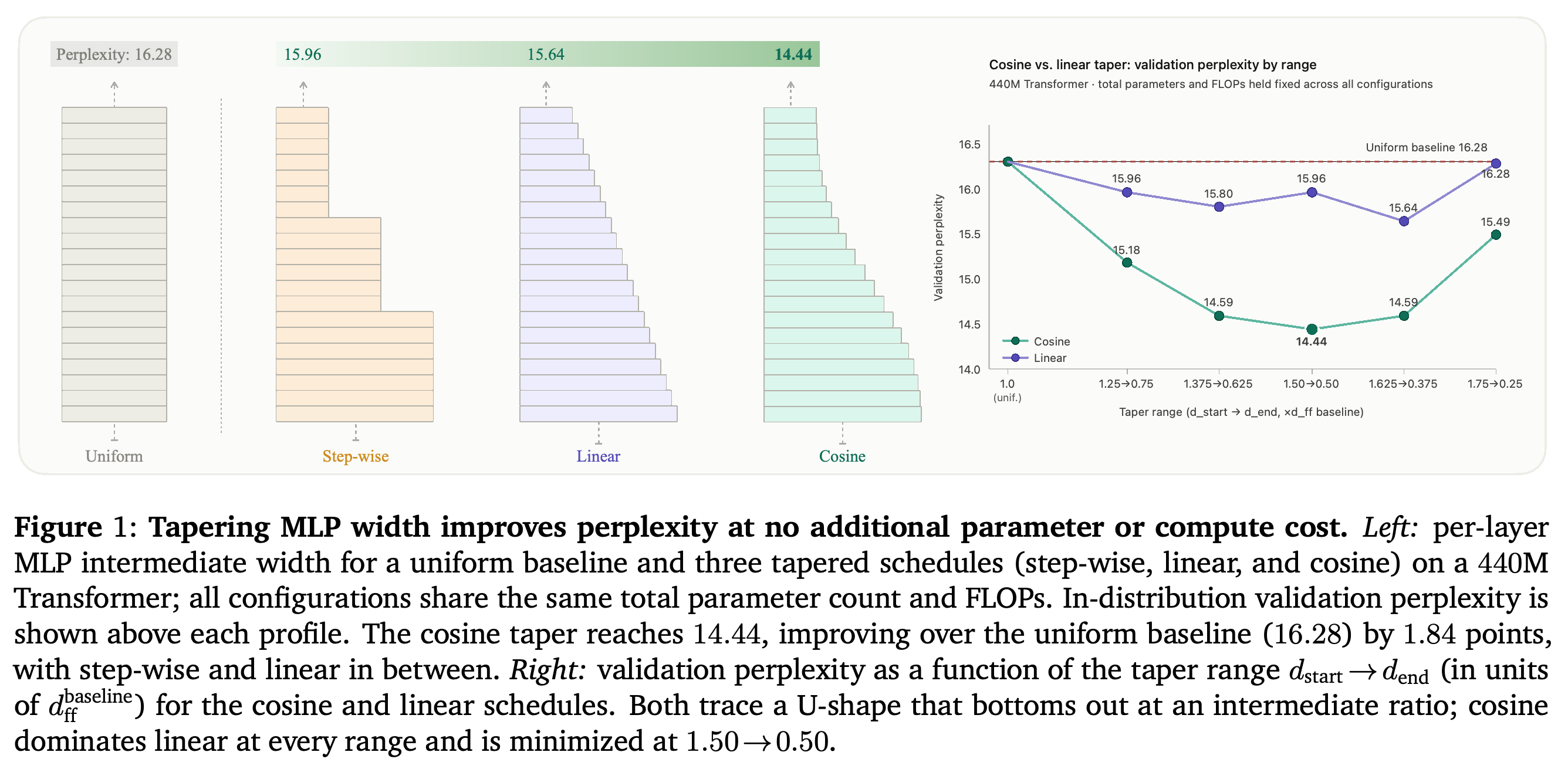
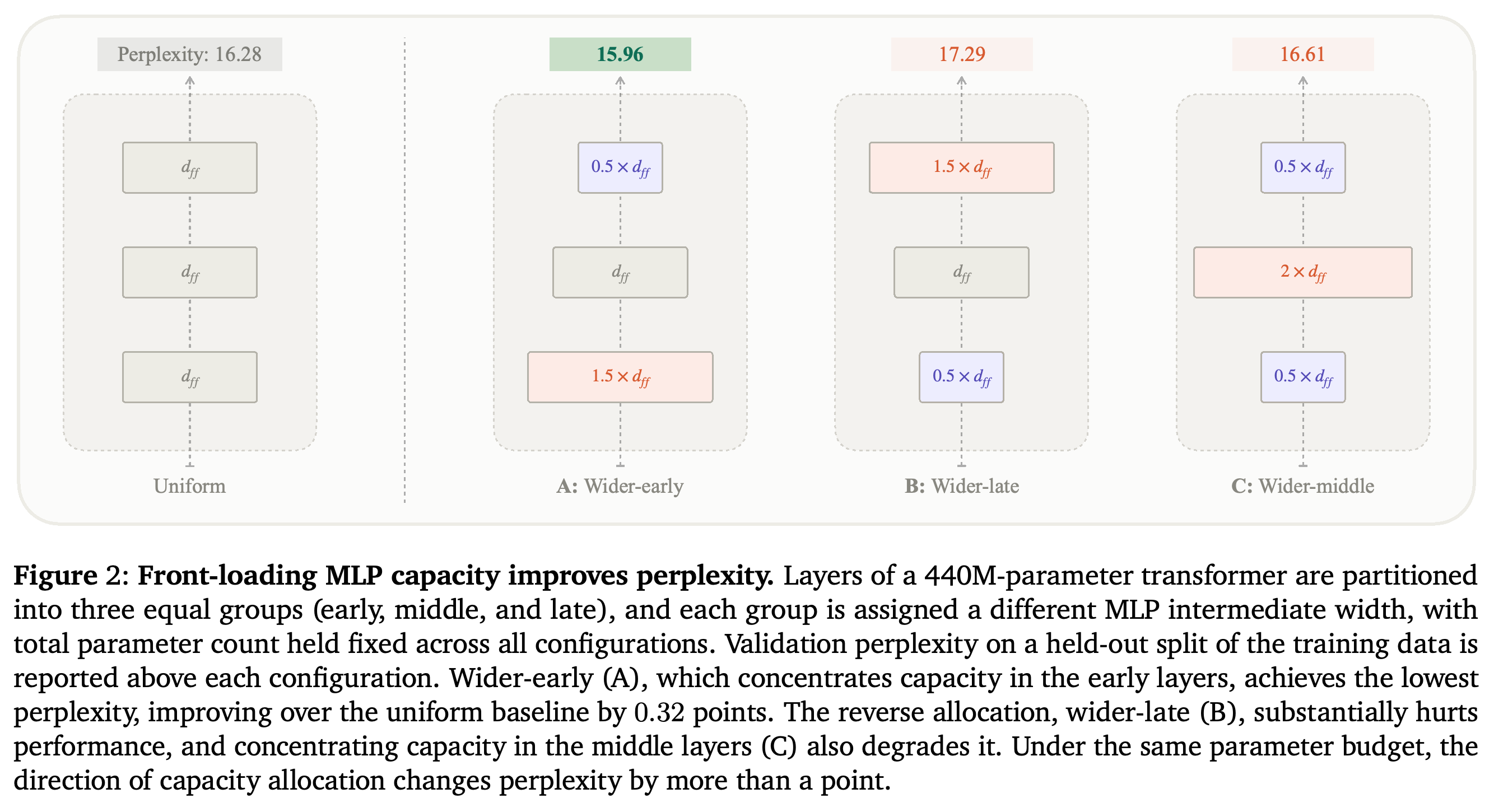
June 2026’s selected papers share a theme of matching system design to measured needs: they examine which information agents retain, which generated examples help a target model learn, and where language models allocate capacity across layers. Agent memory, persistent and revisable state across sessions, benefits from preserving evidence needed by later queries. Autodata adapts synthetic training examples through solver feedback, with different difficulty adjustments for computer science and legal reasoning. Tapered Language Models redistributes feedforward capacity toward earlier layers while preserving total parameters and floating-point operation counts. Together, these studies support testing specific allocation choices against workload requirements. 1, 2, 3
Evaluation separates intermediate signals from practical outcomes. The memory study measures evidence retrieval and operation latency alongside answer quality. Autodata distinguishes successful example generation from improvements after training, and its external scientific results depend on whether evaluation measures average correctness or success in at least one attempt. Tapering improves aggregate task scores under equal parameter and computation budgets, but supplies no measured runtime advantage. An engineering implication is to report the outcome being improved and the resources actually controlled: matched example counts do not establish matched generation cost, and equal operation counts do not establish equal latency.
Top Papers in June 2026
1. Are We Ready For An Agent-Native Memory System?
- https://arxiv.org/abs/2606.24775
- Are We Ready For An Agent-Native Memory System? | Summary
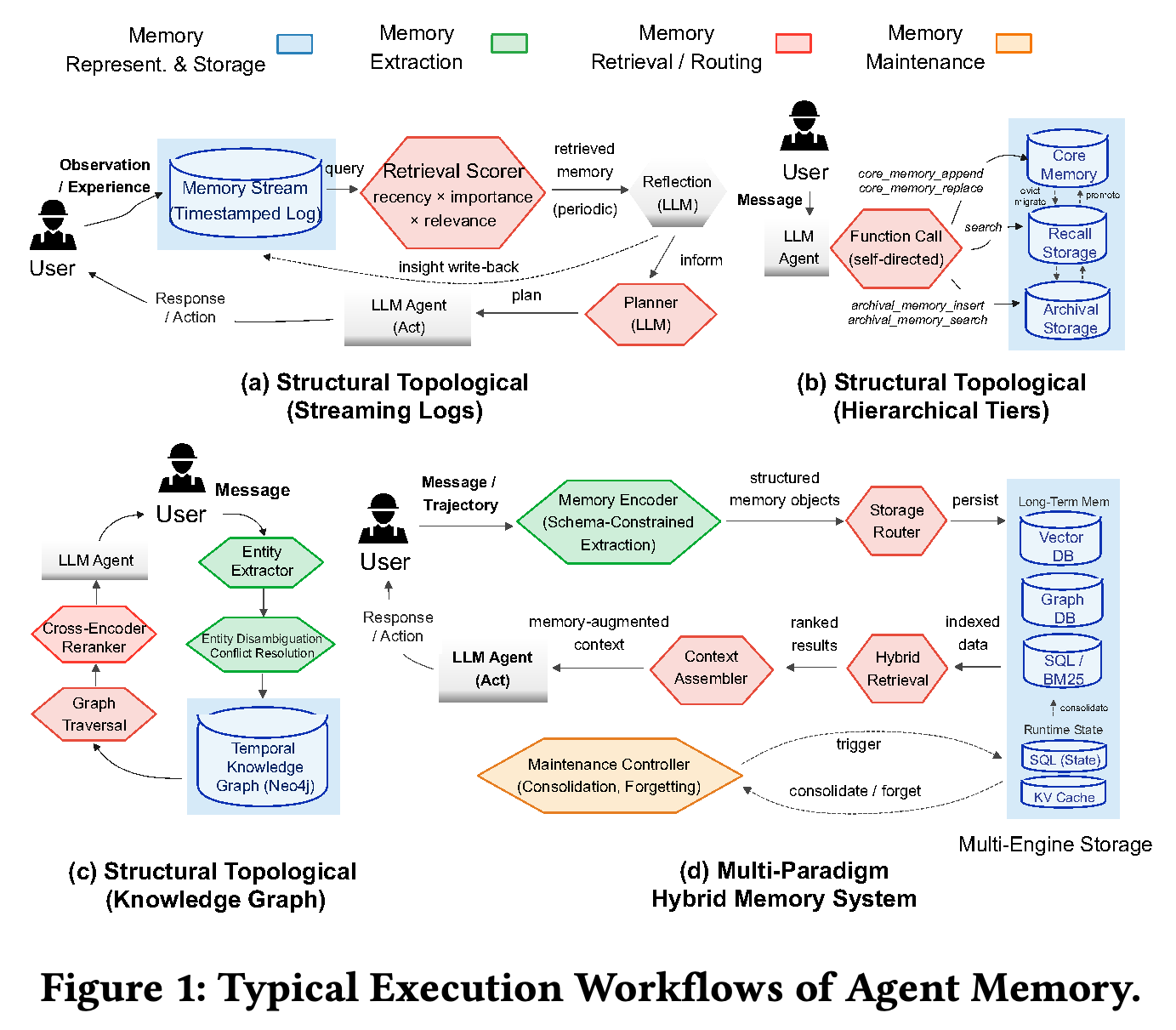
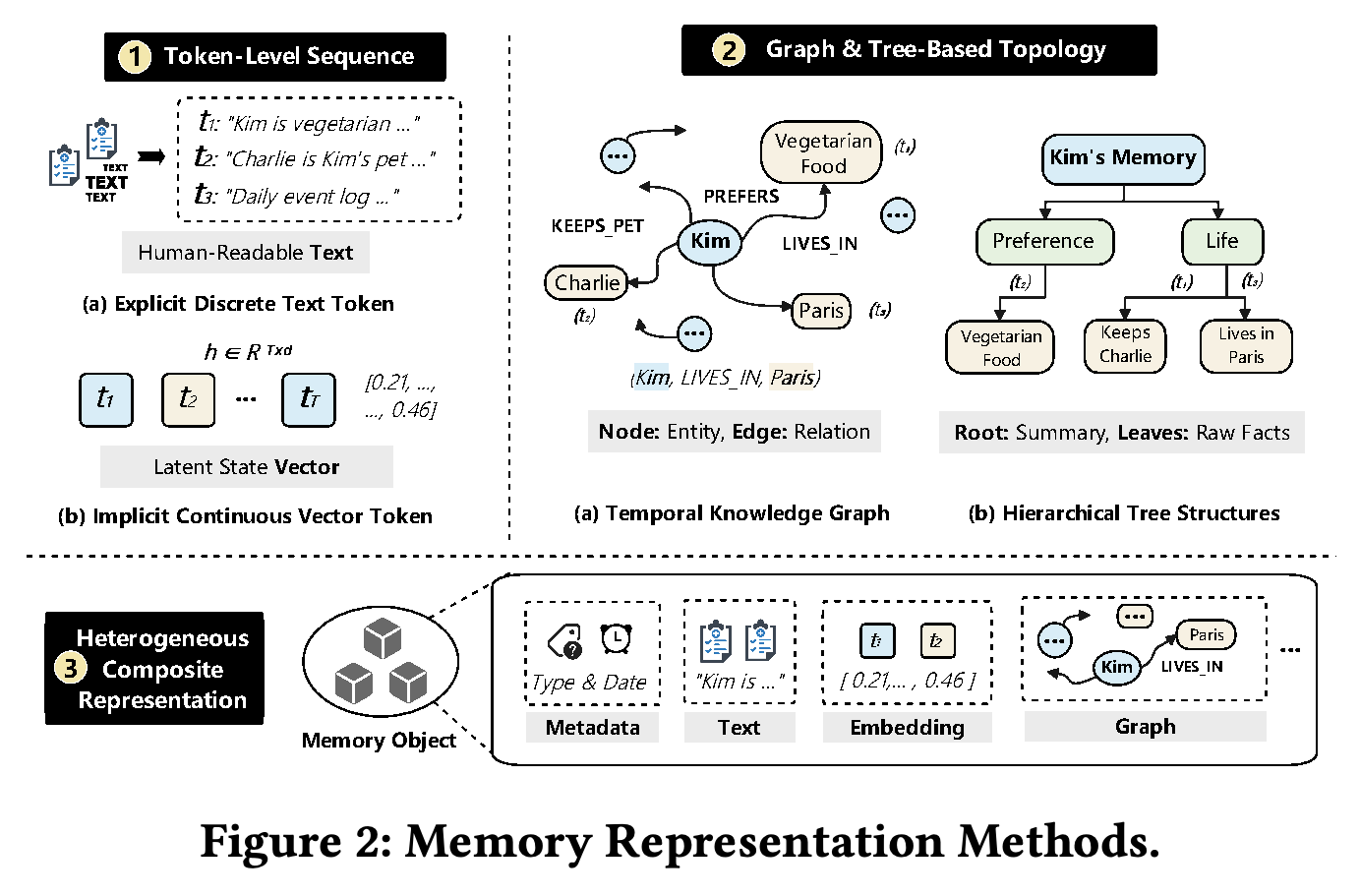
- Are We Ready For An Agent-Native Memory System? decomposes memory into representation and storage, extraction, retrieval and routing, and maintenance. It compares 12 representative systems and two reference baselines across five benchmark workloads spanning 11 datasets, with coverage varying by experiment.
- On LoCoMo, a long-conversation question-answering benchmark, A-MEM reaches 85.9% Recall@10, measuring coverage of annotated supporting evidence within the top ten retrieved source-id groups; MemTree reaches 80.5% and Embedding RAG, retrieval-augmented generation using embedding search, reaches 17.7%. These whole-system comparisons favor linked or hierarchical evidence access without isolating representation as the cause.
- Evidence retention has a substantial effect in the LightMem ablation: User-Only Raw reaches 38.9 LoCoMo Answer F1, an answer-overlap measure, versus 15.6 for User-Only Summary. Operational comparisons also vary sharply by workload: on LongBench’s context-length stress tests, reported outlier-filtered average latency is 17.3 s per query for LightMem, 116.7 s for MemTree, and 2867 s for Zep Local.
2. Autodata: An agentic data scientist to create high quality synthetic data
- https://arxiv.org/abs/2606.25996
- Autodata: An agentic data scientist to create high quality synthetic data | Summary
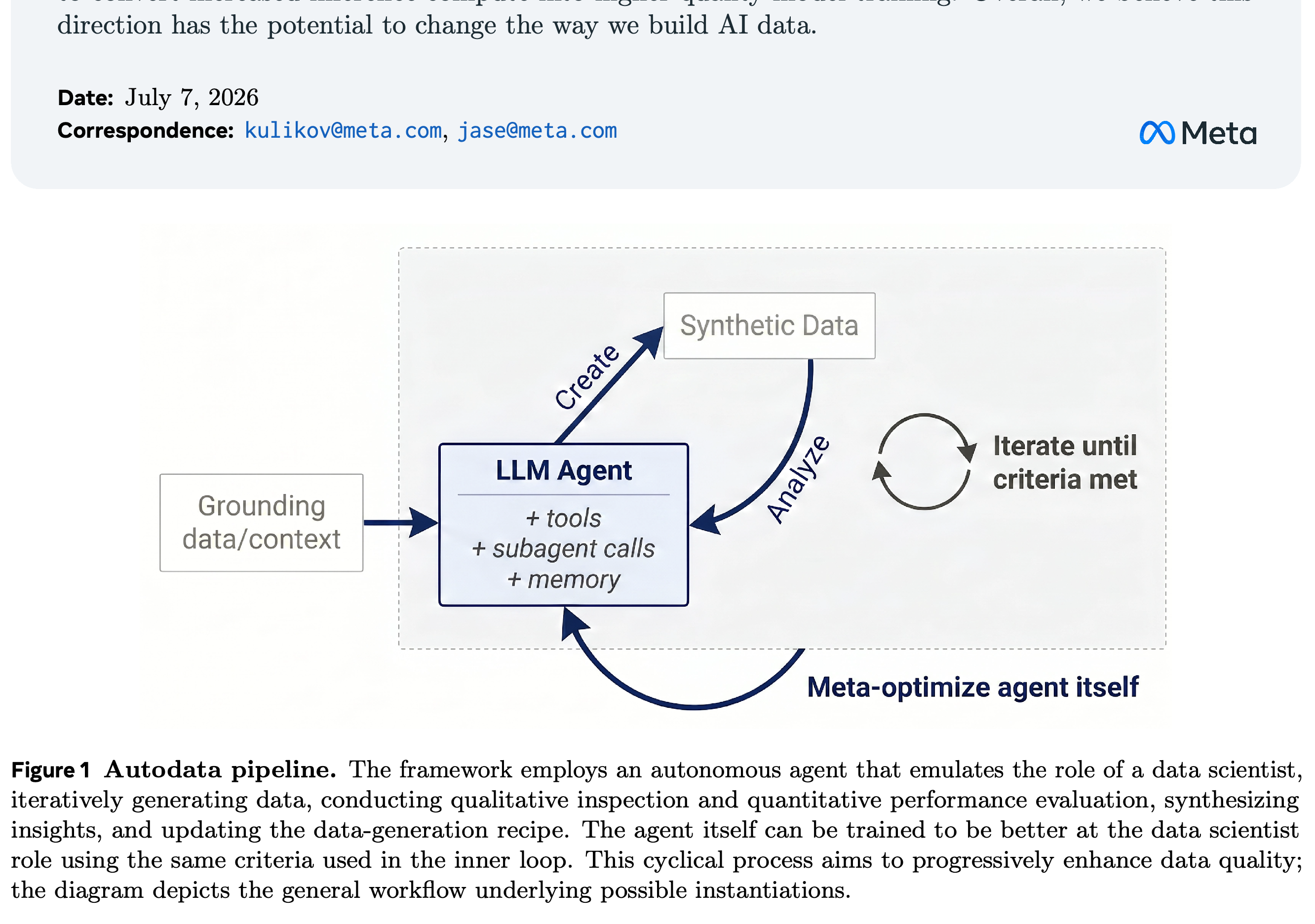
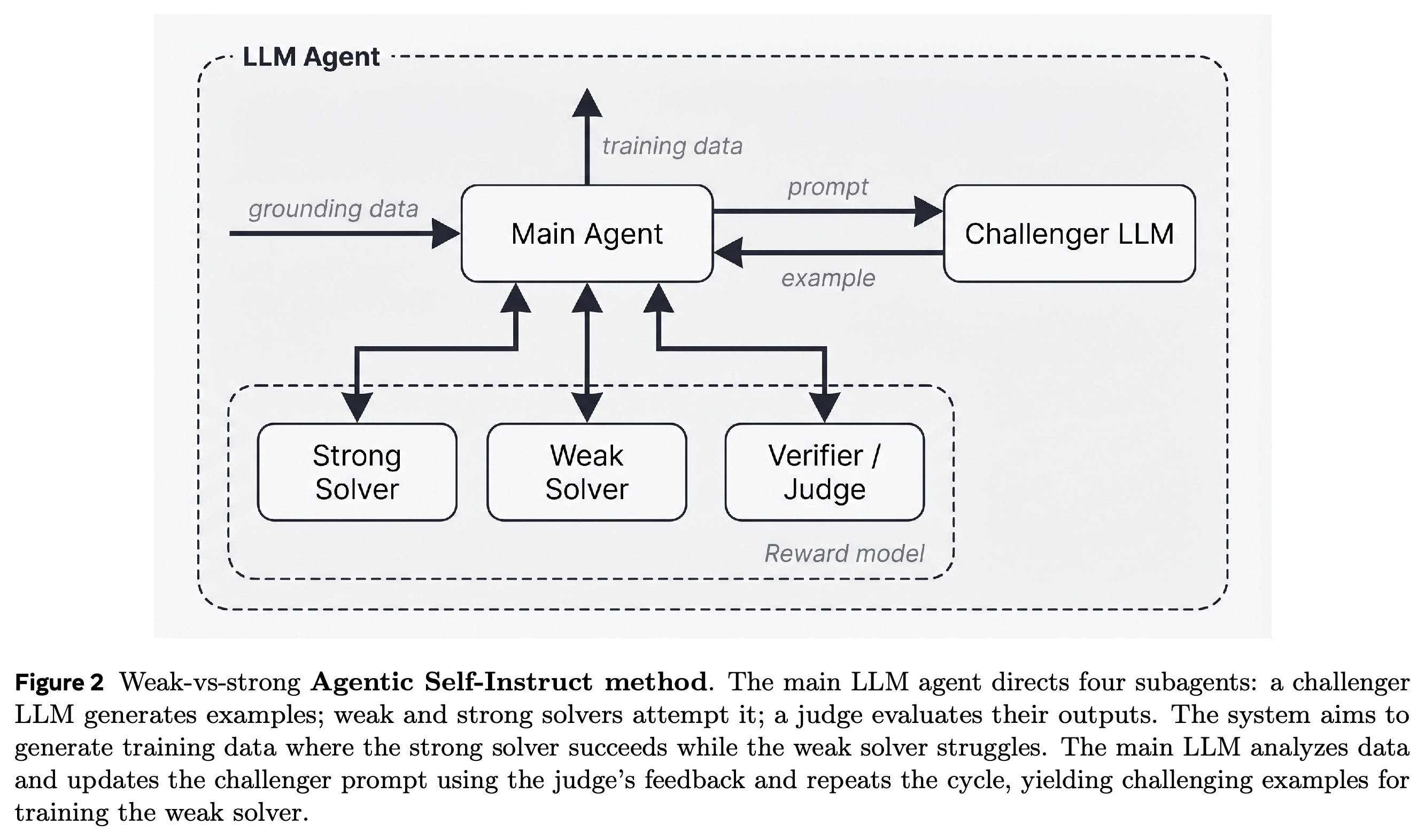
- Autodata: An agentic data scientist to create high quality synthetic data implements Agentic Self-Instruct, a generation loop coordinating a challenger, weak and strong solvers, and a verifier/judge. Feedback revises candidate examples toward model-specific learning utility. Computer science questions become harder for the weak solver; legal questions become more learnable, reducing uniformly near-zero rewards. For judge, see J1: Incentivizing Thinking in LLM-as-a-Judge via Reinforcement Learning | Summary.
- With matched training-example counts, agentic data improves Qwen3.5-4B over chain-of-thought Self-Instruct, which generates examples with explicit reasoning. On external PRBench-Legal evaluation with GPT-5 grading, scores are 0.441 versus 0.377 on Legal and 0.315 versus 0.253 on Legal-Hard. Kimi-K2.6 grading preserves that ordering.
- External scientific transfer is modest and metric-dependent. On the 2,113-item Principia benchmark, agentic training achieves 51.47% avg@8, average correctness across eight attempts, versus 50.43% for the base model and 51.10% for chain-of-thought data. Overall pass@8, success in at least one of eight attempts, favors chain-of-thought data at 60.06% versus 59.91% for agentic data.
3. Tapered Language Models
- https://arxiv.org/abs/2606.23670
- Tapered Language Models | Summary
- Tapered Language Models decreases multilayer perceptron (MLP) intermediate width, the feedforward module’s internal dimension, across depth while preserving its average. Each comparison holds total parameters, training and inference operation counts, and training hyperparameters fixed. A 15-configuration sweep on a 440M-parameter Transformer selects a cosine taper from 1.50 to 0.50 times baseline width, reducing validation perplexity, a language-modeling metric where lower is better, from 16.28 to 14.44.
- Transferring the selected profile unchanged to four architectures at 760M and 1.3B parameters improves average accuracy across eight reported tasks in all eight comparisons. LAMBADA perplexity improves in all eight, while WikiText perplexity improves in seven; 1.3B Hope-attention changes from 15.91 to 15.94. Individual task accuracies sometimes decrease.
- Measurements on pretrained GPT-2 models show later MLP updates becoming more directionally aligned with incoming representations. This observational proxy motivates earlier capacity allocation but does not establish its causal mechanism. The schedule search covers only the 440M Transformer, and the paper reports neither repeated-seed uncertainty nor measured latency or throughput, limiting claims about optimality, reliability, and deployment efficiency.
Sources
[1] Are We Ready For An Agent-Native Memory System?
[2] Autodata: An agentic data scientist to create high quality synthetic data