


Monthly AI Papers: May 2025
31 May 2025 | Paper Review Monthly Papers Model Evaluation Reasoning Strategies Reinforcement LearningContents
This retrospective digest revisits the May 2025 selection using 2504.20879v2 (12 May 2025), 2505.10185v1 (15 May 2025), and 2505.10320v3 (13 October 2025). The results and analysis reflect these archived versions, including the October revision of J1.
Trends
May 2025’s theme is measuring and shaping model behavior through evaluation: the three selected papers examine how testing procedures, reasoning instructions, and judge training affect reported performance. The Leaderboard Illusion audits Chatbot Arena, where users choose between anonymous model responses; CoT Encyclopedia organizes chain-of-thought, the intermediate reasoning text generated before an answer, into strategies that can guide instructions; J1 trains an LLM-as-a-Judge, a large language model that evaluates other models’ responses. Together, they support examining how a score was produced alongside its numerical value. 1, 2, 3
Evaluation conditions materially affect the interpretation of improvements. Arena-specific training raises performance on prompts drawn from that evaluation distribution without improving a separate knowledge benchmark. CoT Encyclopedia reports gains from selectively retrying questions the model initially answered incorrectly, with its initially correct answers retained in the aggregate. J1 distinguishes random-order accuracy, correctness with a randomly ordered response pair, from position-consistent accuracy, which requires correct judgments under both response orders. These findings support reporting training exposure, which incorrectly answered questions are retried, and response-order requirements when comparing results.
Generated reasoning becomes an intervention target as well as an object of analysis. CoT Encyclopedia uses strategies observed in successful responses to select question-specific instructions, while J1 uses reinforcement learning, training from rewards assigned to generated outputs, to improve reasoning and judgments jointly. Both report benchmark gains, but neither establishes that the generated reasoning faithfully represents the model’s underlying computation. Readable explanations and improved outcomes therefore remain separate claims in these experiments.
Top Papers in May 2025
1. The Leaderboard Illusion
- https://arxiv.org/abs/2504.20879
- The Leaderboard Illusion | Summary
- The Leaderboard Illusion combines approximately 2M battles, or pairwise model comparisons, across 243 models from 42 providers with simulations and live submissions. It examines private testing before public model identification, selective score publication, unequal access to user prompts, and model retirement as mechanisms that can affect leaderboard results.
- With training fixed at 1.3K steps and batch size 128, increasing Arena data from 0% to 70% raises a seven-billion-parameter model’s win rate against Llama-3.1-8B-Instruct from 23.5% to 49.9%. Evaluation uses 500 English ArenaHard prompts drawn from Arena and gpt-4o-2024-11-20 as the automated judge. Accuracy on MMLU, the Massive Multitask Language Understanding knowledge benchmark, changes from 66.5% to 65.9%, showing no improvement on that separate evaluation.
- Two identical Aya-Vision-8B checkpoints, or saved model weights, receive Arena Scores of 1052 and 1069 with overlapping uncertainty intervals. This demonstrates an opportunity to publish a favorable observed score without changing the model. Selecting among genuinely different candidates also includes real quality differences, so its entire advantage cannot be attributed to measurement noise. Incomplete records and ownership inferred from model self-identification limit conclusions about individual providers; the audit does not quantify each mechanism’s contribution to actual published rankings.
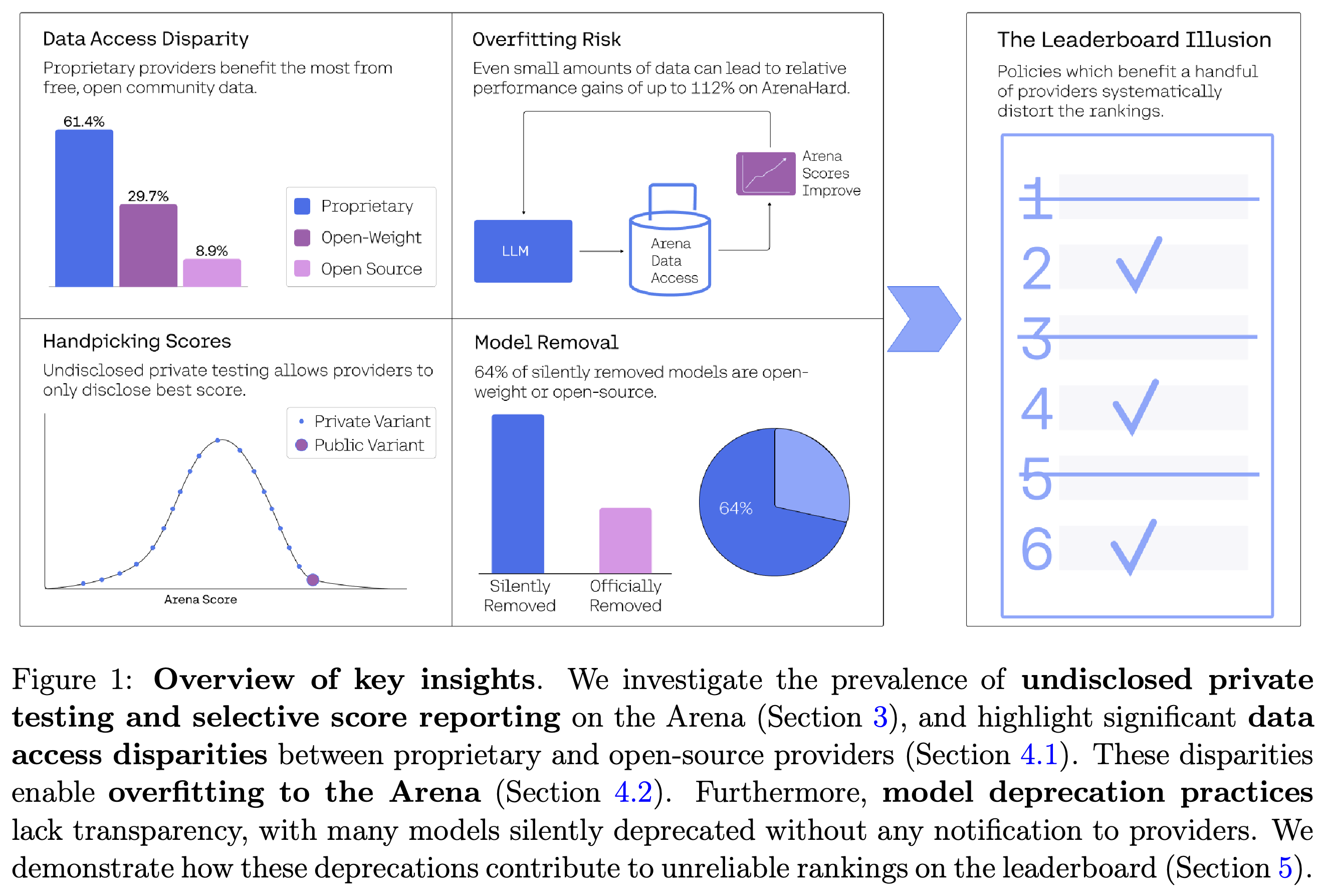
Figure 1. Data access disparities, overfitting, selective score reporting, and model removal in Arena.
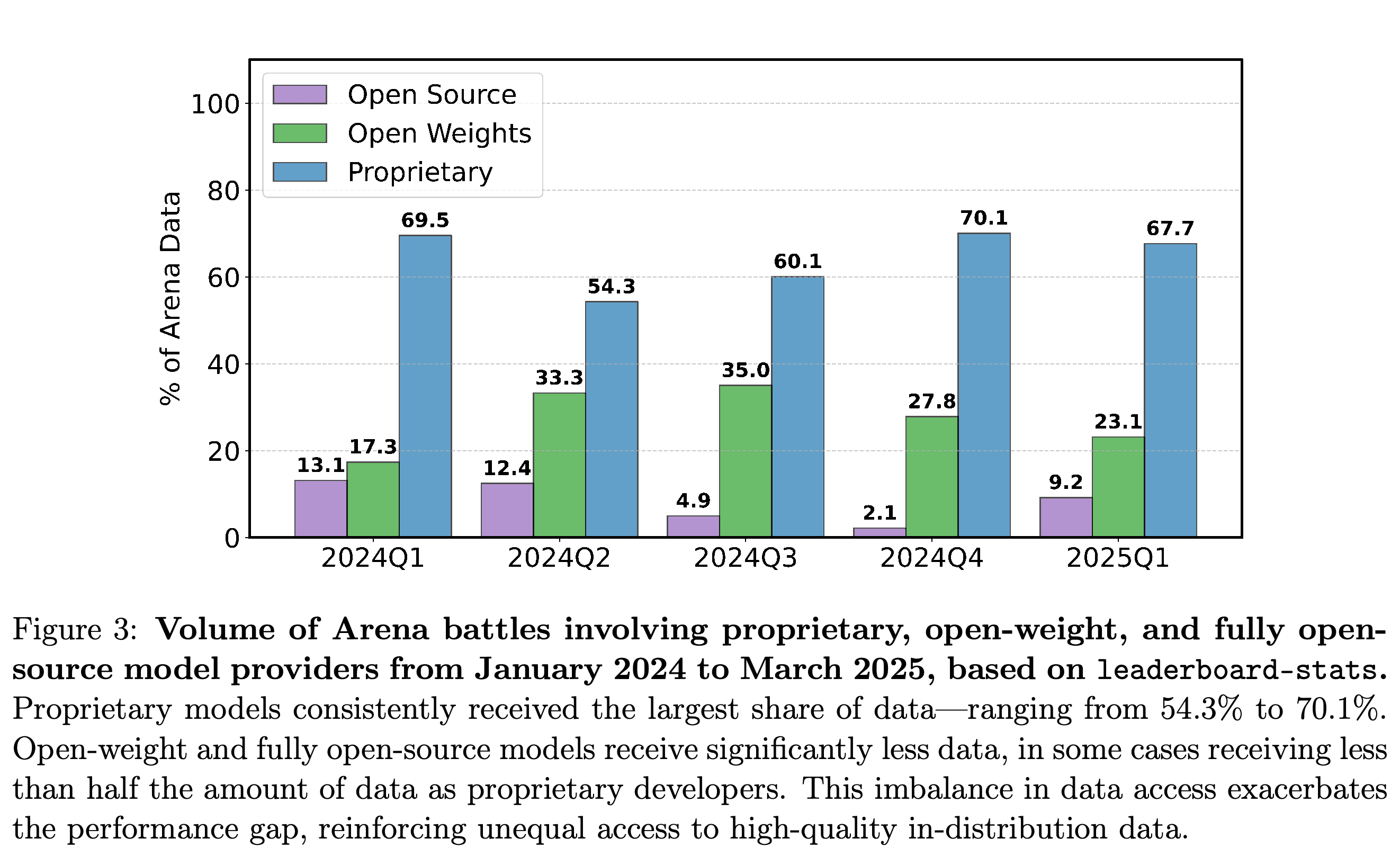
Figure 3. Quarterly Arena battle shares by model-license category, January 2024 to March 2025.
2. The CoT Encyclopedia: Analyzing, Predicting, and Controlling how a Reasoning Model will Think
- https://arxiv.org/abs/2505.10185
- The CoT Encyclopedia: Analyzing, Predicting, and Controlling how a Reasoning Model will Think | Summary
- The CoT Encyclopedia: Analyzing, Predicting, and Controlling how a Reasoning Model will Think derives opposing strategy descriptions from generated responses, groups similar descriptions, and builds rubrics for classifying response behavior. Its main problem-solving analysis compresses 4,057 criteria into six dimensions. Human evaluators approve its analyses in 92% of cases, compared with 51% for predefined behavior analyses, across 100 responses; these ratings assess perceived reasonableness.
- Classifiers trained on questions initially answered correctly select strategy instructions for initially incorrect questions. Reported aggregate accuracy rises from 72.7% to 81.0% on GPQA-Diamond, a reasoning benchmark, from 88.9% to 92.3% on MMLU-Redux, a knowledge benchmark, and from 78.2% to 80.7% on MATH-500, a mathematics benchmark. These aggregates retain previously correct responses and add successful corrections; the experiment does not measure the effect of applying instructions to every incoming question.
- Training-data format also changes measured response behavior. On Arena-Hard, an instruction-following benchmark, the multiple-choice-trained model averages 1301 completion tokens, or generated text units, versus 2561 for the free-form-trained model; multiple-approach proportions are 75.4% and 57.4%, respectively. Linear interpolation between the two models’ weights changes strategy distributions without additional training, but the paper reports no accuracy or safety improvement for intermediate mixtures.
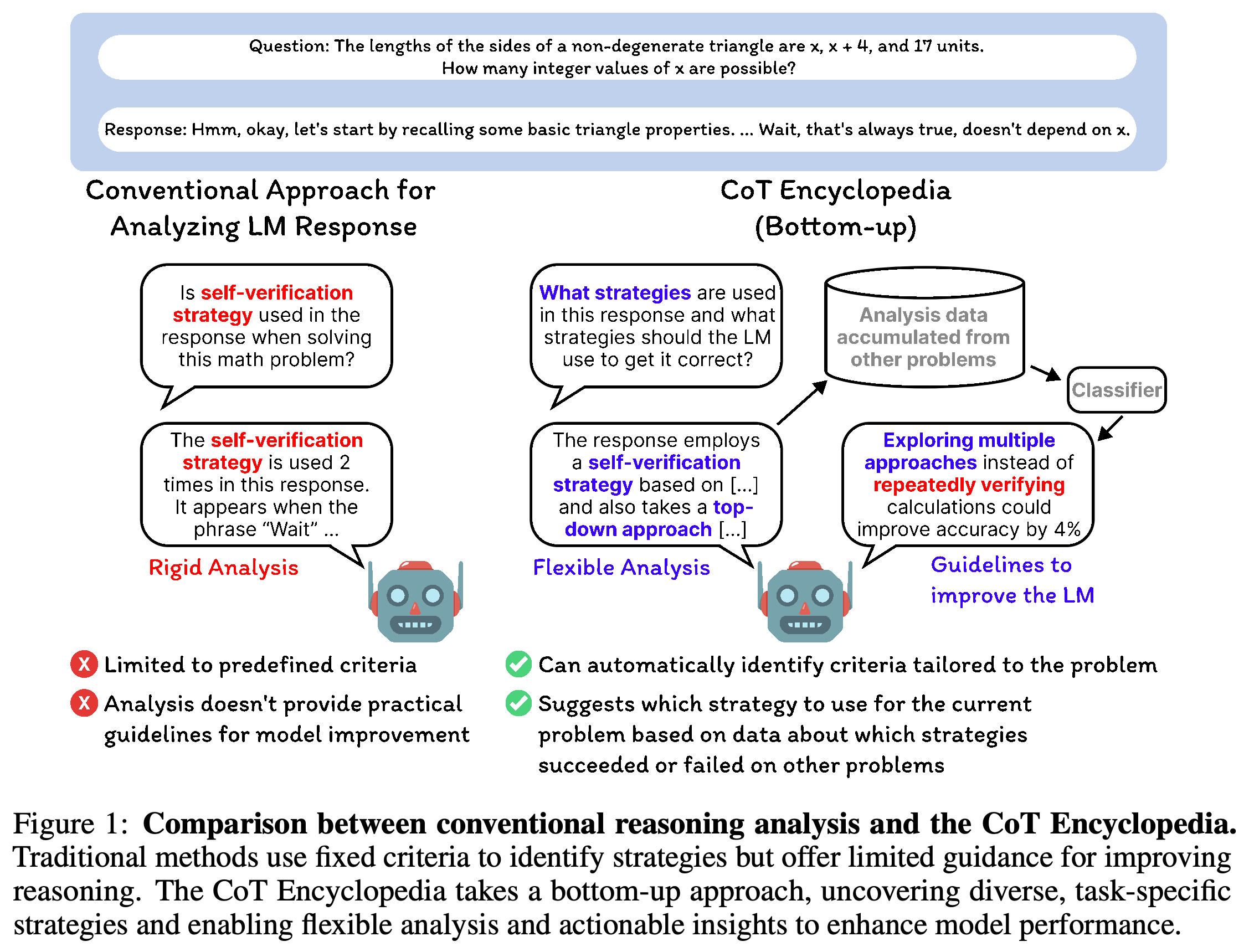
Figure 1. Fixed-criteria reasoning analysis versus the bottom-up CoT Encyclopedia approach.
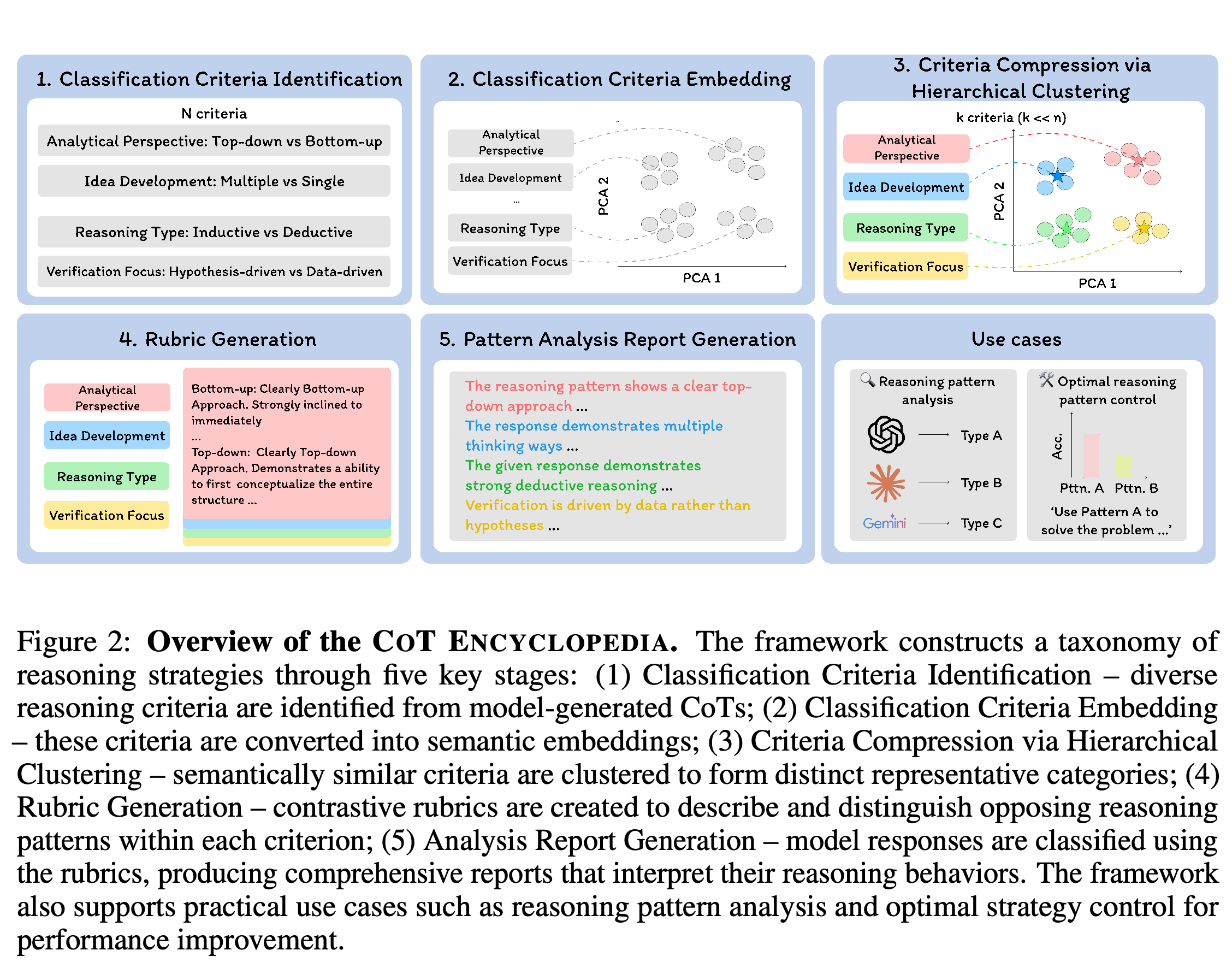
Figure 2. CoT Encyclopedia stages from criteria identification to pattern analysis and downstream use.
3. J1: Incentivizing Thinking in LLM-as-a-Judge via Reinforcement Learning
- https://arxiv.org/abs/2505.10320
- J1: Incentivizing Thinking in LLM-as-a-Judge via Reinforcement Learning | Summary
- J1: Incentivizing Thinking in LLM-as-a-Judge via Reinforcement Learning trains judges on 22K synthetic preference pairs containing preferred and rejected responses. Training includes both response orders and combines pairwise evaluation, comparing two responses together, with pointwise evaluation, scoring each independently. Rewards check judgments against constructed preference labels; for subjective prompts, those labels are not independently established as human preferences.
- In pairwise evaluation, J1-Qwen-32B-MultiTask reaches 76.8% accuracy on Preference Proxy Evaluations (PPE) Correctness, a benchmark of verifiable response pairs, compared with 66.5% for Qwen3-32B, a gain of 10.3 percentage points. Across five benchmarks using their respective metrics, its reported overall score is 80.8, versus 77.3 for Qwen3-32B and 78.4 for DeepSeek-R1-671B. RewardBench, one of those benchmarks, also serves as the model-selection criterion.
- Response-order checks expose a remaining limitation: the multitask model scores 76.8% and 76.2% under the two pairwise orders, but only 67.0% when both must be correct. Pointwise evaluation reaches 70.6% position-consistent accuracy with a 10.5% tie rate. Its pairwise verdict-flip rate, the proportion whose preferred response changes after swapping order, remains 17.0%. These results make order robustness a separate operating requirement; the paper provides no latency or cost comparison for its generated reasoning or additional sampling.
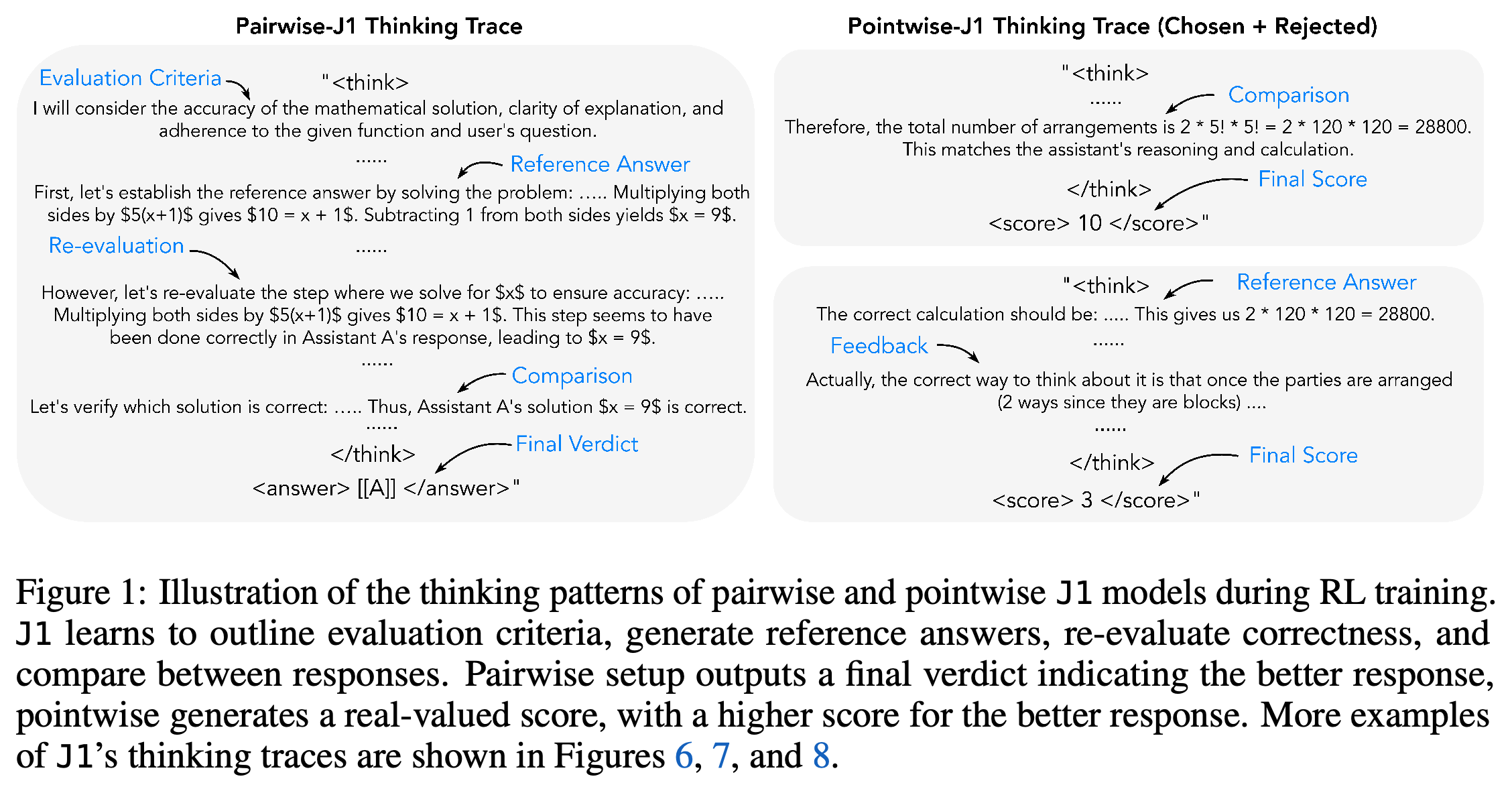
Figure 1. Illustrative pairwise and pointwise J1 reasoning traces during reinforcement learning.
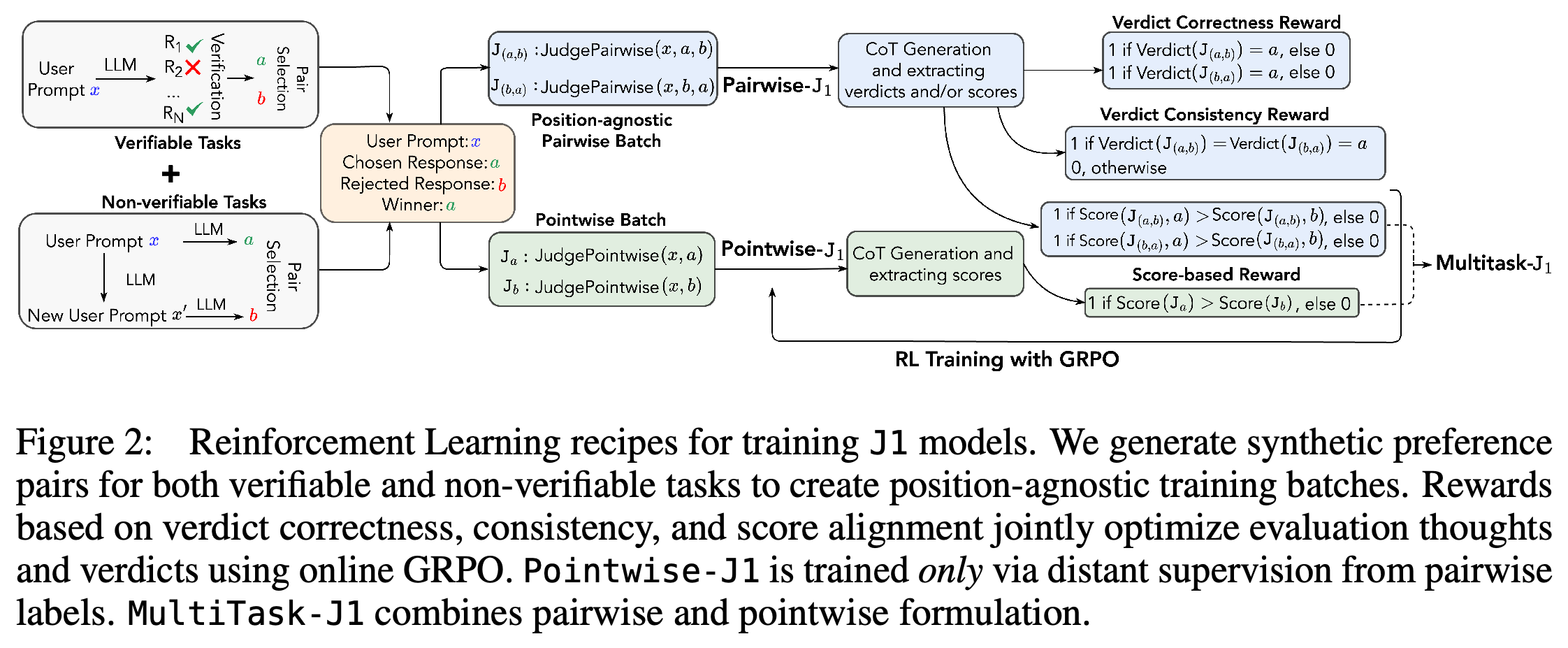
Figure 2. Synthetic preference data, reward computation, and GRPO training for J1 variants.
Sources
[2] The CoT Encyclopedia: Analyzing, Predicting, and Controlling how a Reasoning Model will Think
[3] J1: Incentivizing Thinking in LLM-as-a-Judge via Reinforcement Learning